The Higher Men’s Affirmation of Life
Thus Spoke ZarathustraThe Higher Men’s Affirmation of Life, also known as The Intoxicated Song or The Midnight Song, turns a night of fellowship into a test of whether joy can affirm life in its entirety. The Ugliest Man’s testimony gives the change a human measure: after a life he had found difficult to accept, one day and one festival with Zarathustra make him willing to live it again. Zarathustra then gives that impulse a larger reach through the midnight song, in which wanting a moment twice means wanting all things to return together, including woe.
The Night and the Turning Point
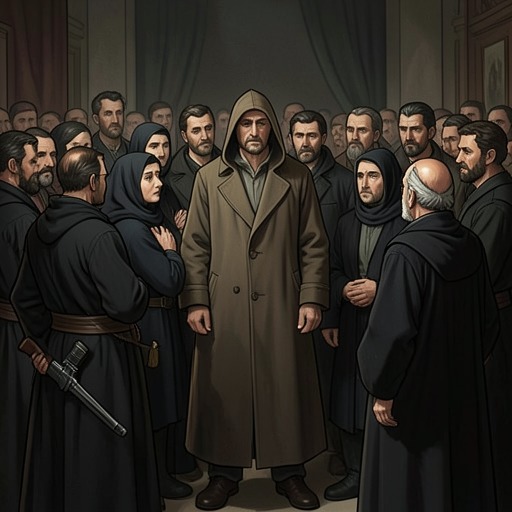
After the Ass festival, The Higher Men leave the cave for the open air and the cool night. Zarathustra leads The Ugliest Man by the hand, showing him the moon and the silver waterfalls beside Zarathustra’s cave. The group stands together in silence. Though they are described as old, they feel comforted and brave, and are astonished to find themselves so well on earth. The setting is not merely a pause after the festivities: in the stillness, their temporary happiness gathers weight, and the mystery of the night draws closer to them.
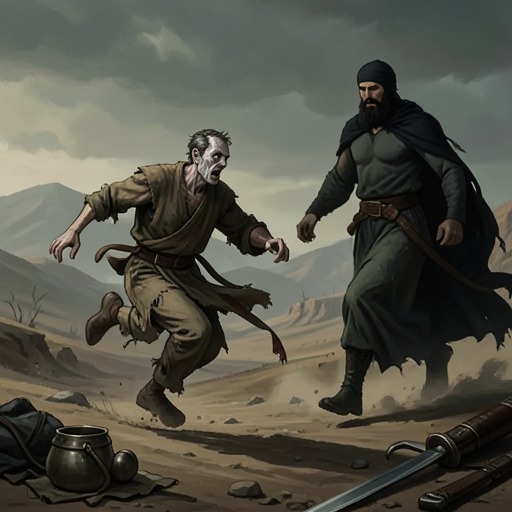
Zarathustra privately delights in how The Higher Men please him, but does not voice the thought, respecting their happiness and silence. The scene’s decisive turn comes when The Ugliest Man begins to gurgle and snort again. This time, however, the return of his strange manner does not end in inarticulacy. After struggling toward speech, he asks a clear, deep question that moves everyone who hears it. The contrast between his bodily sounds and the clarity of the question makes his declaration feel like a breakthrough rather than a polished lesson delivered from outside the group.
The Ugliest Man’s Testimony
The Ugliest Man says that, for the sake of this day, he is content for the first time to have lived his whole life. He immediately makes the claim more than a momentary expression of gratitude: one festival with Zarathustra has taught him to love the earth, and the worth of that day makes continued life desirable. His affirmation does not depend on pretending that his past was happy or that suffering has vanished. Instead, the present experience alters his relation to the life he has already lived.
He expresses the change as a willingness to address death with a request for another round. He then asks his assembled friends whether they, too, will say yes to life again for Zarathustra’s sake. The question turns his private recognition into an invitation. Its force lies in its scale: he does not claim that one day cancels the rest of existence, but that this day is enough to make the whole of his life worth having lived. The possibility of repeating the joy becomes the test of whether it can be affirmed without qualification.
The Midnight Song
The testimony transforms the gathering. The Higher Men recognize both their recovery and the one who has given them this experience, and rush toward Zarathustra with gratitude and adoration. Their response is physically demonstrative: they caress and kiss his hands, while some laugh and others weep. The Prophet of the Great Weariness dances with pleasure and is said to have renounced his weariness. The account treats another detail with deliberate uncertainty: some narrators say that The Ass danced after The Ugliest Man gave it wine, but the narrator allows that this may or may not have happened, adding that stranger marvels occurred regardless.
Zarathustra, meanwhile, appears intoxicated by the event. His eyes dim, his tongue stammers, and his feet totter. His soul seems to withdraw into remote distances, described as wandering like a heavy cloud between past and future. As The Higher Men hold him, he gradually comes to himself and restrains their adoration with his hands, but remains silent. He turns as if he has heard something, places a finger to his lips, and calls them to follow. The slow, repeated summons changes the gathering’s emotional exuberance into attentive stillness. A bell rises from the depths; The Higher Men, The Ass, Zarathustra’s Eagle and Serpent, the cave, the moon, and the night itself are all gathered into the listening moment. Zarathustra finally says that the hour has come to walk into the night.
Joy, Woe, and Return
The midnight song develops The Ugliest Man’s willingness to live again into a principle of affirmation. Zarathustra asks whether the Higher Men have ever said yes to one joy, then insists that such a yes includes all woe as well. Things are chained and entwined together: a person who wants one moment twice also wants everything to return, not merely the pleasurable part isolated from what accompanied it. The song’s movement therefore runs from a single remembered happiness toward the totality of existence. Its affirmation is demanding precisely because it refuses to separate joy from pain, blessing from curse, or one moment from the whole sequence of life.
Zarathustra invites The Higher Men to sing the roundelay called Once more, whose meaning is To all eternity. The refrain sets woe’s wish to fade and go against joy’s desire for deep eternity. What began as one man’s astonishment that life could be loved becomes a collective song, but the group must do more than celebrate its recovery: it must learn what its own yes entails. In this scene, the midnight hour gathers festival, silence, bodily exuberance, listening, and song into a single progression. The episode’s decisive claim is that a joy fully affirmed does not ask for an edited life. It wills the return of all things bound up with that joy.